
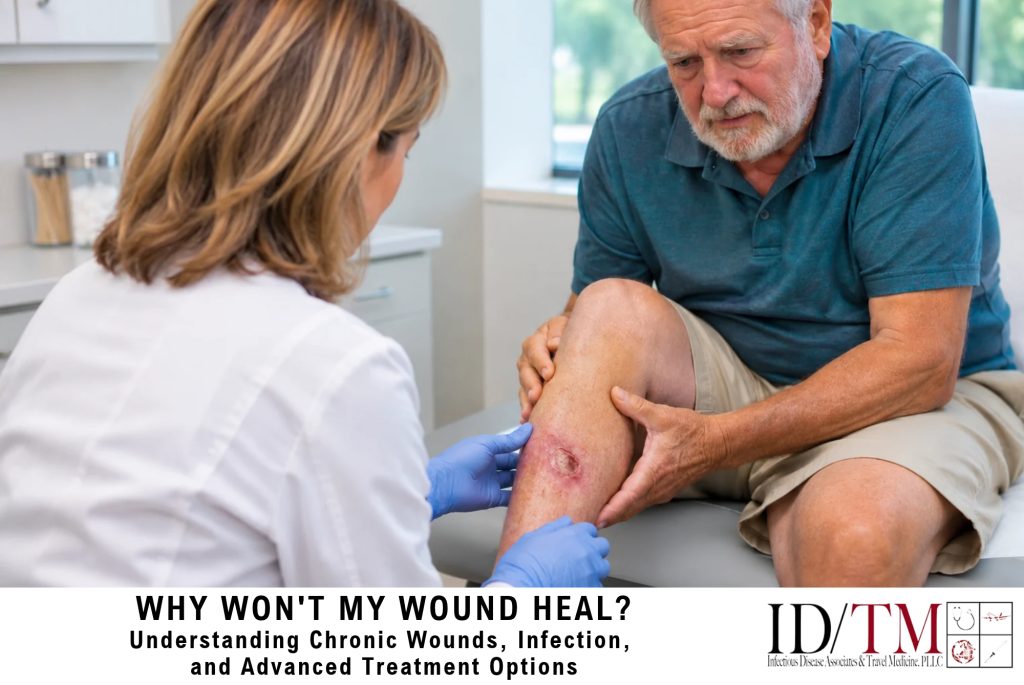
Most minor cuts and skin injuries begin healing within days and continue improving over the following weeks. However, some wounds remain open, repeatedly break down, or show little improvement despite basic wound care.
A wound that does not heal as expected can indicate an underlying medical problem, including poor circulation, diabetes, prolonged pressure, infection, or impaired tissue repair.
Chronic wounds require more than routine bandages. Successful treatment begins with identifying why the wound is not healing and addressing the factors preventing recovery.
At Infectious Disease Associates and Travel Medicine, patients in Gainesville, Lake City, and surrounding North Central Florida communities can receive specialized evaluation for nonhealing wounds, wound infections, and related infectious disease complications.
What Is a Chronic or Nonhealing Wound?
A chronic wound is an injury that fails to progress through the expected stages of tissue repair.
Although definitions vary, wounds that remain open for several weeks without meaningful improvement or fail to heal over an extended period warrant further evaluation.
How Normal Wound Healing Works
Wound healing involves four overlapping biological phases.
The first phase, hemostasis, controls bleeding through clot formation.
The inflammatory phase allows immune cells to remove damaged tissue and microorganisms.
During proliferation, new blood vessels, connective tissue, and skin begin forming.
Finally, remodeling strengthens and reorganizes the repaired tissue.
Chronic wounds can become stalled in one or more of these phases, particularly when inflammation persists or adequate circulation is lacking.
Why Do Some Wounds Refuse to Heal?
Several factors can interfere with normal tissue repair.
1. Poor Blood Circulation
Adequate circulation delivers oxygen, nutrients, and immune cells to damaged tissue.
Peripheral artery disease can reduce blood flow, especially to the feet and lower legs.
When circulation is severely impaired, wounds may not heal until the underlying vascular problem is addressed.
2. Diabetes
Diabetes can contribute to delayed healing through neuropathy, vascular disease, and metabolic abnormalities.
Patients may develop wounds from minor injuries or repetitive pressure without recognizing the damage.
3. Persistent Pressure
Pressure injuries occur when prolonged pressure reduces blood flow to vulnerable tissue.
These wounds are particularly common in people with limited mobility.
Without pressure relief, tissue damage can continue even when wound dressings are used correctly.
4. Venous Insufficiency
Venous insufficiency occurs when the veins have difficulty returning blood from the legs to the heart.
This can cause swelling, skin changes, and chronic ulcers, particularly near the ankles.
Compression therapy is often an important component of treatment when arterial circulation is adequate.
5. Infection
A wound infection can damage surrounding tissue and interfere with healing.
Bacteria may invade deeper structures, produce abscesses, or contribute to persistent inflammation.
However, the presence of bacteria on a wound surface does not automatically mean the wound is infected.
6. Dead or Damaged Tissue
Necrotic tissue can interfere with wound assessment and healing.
Debridement may be necessary to remove nonviable tissue and prepare the wound for further treatment.
7. Nutritional Deficiencies and Other Medical Conditions
Adequate protein, calories, vitamins, and minerals are important for tissue repair.
Malnutrition, certain medications, immune system disorders, and chronic illnesses can impair wound healing.
How Can You Tell Whether a Nonhealing Wound Is Infected?
Chronic wounds frequently contain bacteria, but bacterial colonization and clinical infection are different conditions.
Signs of Wound Infection
Findings that raise concern include increasing redness, warmth, swelling, tenderness, purulent drainage, or rapidly worsening tissue damage.
Some infected wounds develop a foul odor, although odor alone is not sufficient to diagnose infection.
Signs of Deep Infection
A deep infection may involve muscle, tendon, joint structures, or bone.
Severe pain, exposed deeper tissue, spreading inflammation, or systemic symptoms can indicate a more serious problem.
Patients with neuropathy may not experience significant pain even when infection is advanced.
When Infection Becomes an Emergency
Rapidly spreading redness, blackened tissue, severe pain, fever with systemic illness, or signs of sepsis require emergency medical evaluation.
A wound associated with severe loss of circulation also requires urgent assessment.
What Types of Chronic Wounds Require Specialized Care?
Different wound types have different causes and treatment requirements.
Diabetic Foot Ulcers
Diabetic foot ulcers commonly develop because of neuropathy, repetitive pressure, and circulation problems.
Treatment requires attention to pressure offloading, diabetes management, circulation, and infection when present.
Venous Leg Ulcers
Venous ulcers often develop near the ankles and are associated with leg swelling and chronic venous disease.
Appropriate compression therapy and management of venous insufficiency are important for healing.
Arterial Ulcers
Arterial ulcers result from inadequate blood supply.
They can be painful and may develop on the toes, feet, or other areas with compromised circulation.
Vascular evaluation is essential because inadequate blood flow can prevent successful healing.
Pressure Injuries
Pressure injuries develop when sustained pressure damages skin and underlying tissue.
Treatment includes pressure redistribution, wound management, nutritional assessment, and infection control when necessary.
Postsurgical Wounds
Surgical wounds may heal slowly because of infection, tissue tension, inadequate circulation, or other complications.
Persistent drainage, wound separation, or worsening inflammation should be evaluated.
How Do Physicians Diagnose the Cause of a Nonhealing Wound?
A comprehensive wound evaluation addresses more than the wound surface.
Medical History and Physical Examination
The physician reviews the wound’s duration, previous treatments, underlying conditions, and changes over time.
The examination evaluates wound depth, surrounding skin, drainage, tissue viability, and signs of infection.
Vascular Assessment
Circulation testing may include pulse examination, ankle-brachial index testing, toe pressures, or vascular imaging.
These tests help determine whether insufficient blood flow is preventing healing.
Wound Cultures
Cultures are most useful when clinical findings suggest infection.
Appropriate tissue sampling can help identify pathogens and guide antibiotic treatment.
Routine cultures of clinically uninfected wounds are generally unnecessary.
Imaging for Deep Infection
X-rays or MRI may be indicated when physicians suspect an abscess, foreign body, or osteomyelitis.
Biopsy for Unusual Wounds
Wounds that fail to heal despite appropriate care or have atypical features may require biopsy to evaluate for malignancy, inflammatory disease, or another underlying condition.
What Advanced Treatments Are Available for Chronic Wounds?
Treatment must be tailored to the wound’s cause, severity, and underlying medical conditions.
Professional Wound Debridement
Debridement removes dead or damaged tissue that interferes with healing.
The appropriate method depends on circulation, tissue characteristics, infection, and the patient’s overall condition.
Not every wound should undergo aggressive debridement. For example, stable dry eschar in a severely ischemic foot requires careful vascular assessment.
Specialized Wound Dressings
Modern dressings can help maintain an appropriate moisture balance, protect surrounding skin, and manage wound drainage.
Dressings are selected according to wound characteristics rather than assuming one product is suitable for every patient.
Skin Grafts and Cellular or Tissue-Based Products
Some chronic wounds benefit from skin grafting or selected tissue-based products after the underlying causes of poor healing have been addressed.
These treatments are not substitutes for infection control, adequate circulation, or pressure reduction.
Infectious Disease Associates and Travel Medicine lists skin grafting and wound care interventions among its treatment options for appropriate patients.
idtmhealth.com
Antibiotic Therapy for Infected Wounds
Antibiotics are indicated when a wound has a bacterial infection requiring antimicrobial treatment.
The medication, route, and duration depend on the organism and infection severity.
Clinically uninfected ulcers should not receive antibiotics solely to accelerate healing.
Pressure Offloading
Specialized footwear, offloading devices, repositioning, or other strategies may be necessary to reduce pressure on the affected area.
Vascular Intervention
Patients with inadequate circulation may require vascular procedures to improve blood flow.
In some cases, restoring circulation is essential before advanced wound closure can succeed.
Negative-Pressure Wound Therapy
Negative-pressure wound therapy can assist healing in selected wounds by managing exudate and supporting wound bed preparation.
It is not an established substitute for treating infection and is not recommended solely as an adjunct to resolve diabetic foot infection.
Why Is Treating the Underlying Cause So Important?
A chronic wound can remain open even when appropriate dressings are used if the underlying problem persists.
For example, a diabetic foot ulcer may continue deteriorating if pressure is not reduced.
An arterial ulcer may not heal without sufficient blood flow.
A wound with deep infection may require antibiotics and surgical intervention.
Successful treatment therefore involves an individualized plan that addresses the wound and the medical conditions contributing to it.
When Should You See an Infectious Disease Specialist for a Nonhealing Wound?
An infectious disease specialist is particularly valuable when a chronic wound develops a persistent or recurrent infection, involves resistant bacteria, or raises concern for osteomyelitis.
Specialized evaluation can help distinguish bacterial colonization from true infection, determine whether antibiotics are necessary, and guide treatment when previous medications have failed.
Infectious Disease Associates and Travel Medicine provides wound care and infectious disease services for patients in Gainesville, Lake City, and surrounding communities.
Frequently Asked Questions About Nonhealing Wounds
How long is too long for a wound to remain open?
A wound that shows little improvement after several weeks should be evaluated. Patients with diabetes, poor circulation, or signs of infection should seek care sooner.
Does a wound that will not heal always mean infection?
No. Poor circulation, pressure, diabetes, venous insufficiency, and other medical conditions can prevent healing even without infection.
Can a chronic wound heal without surgery?
Yes. Many wounds heal with appropriate pressure relief, circulation management, dressings, and treatment of underlying conditions. Surgery is reserved for selected circumstances.
Are antibiotics necessary for every open wound?
No. Antibiotics are used when there is a bacterial infection requiring treatment. They do not replace proper wound care and should not be used simply because a wound is open.
What is the difference between a wound culture and a wound biopsy?
A wound culture identifies microorganisms that may be contributing to infection. A biopsy examines tissue and can help diagnose conditions such as malignancy, inflammatory disease, or certain infections.
Can poor circulation prevent a wound from healing?
Yes. Inadequate blood flow reduces oxygen and nutrient delivery to the tissue. Significant arterial disease may require vascular intervention.
Do skin grafts help chronic wounds heal?
Skin grafts can help selected wounds close when the wound bed is appropriately prepared and underlying problems are controlled. They are not suitable for every wound.
Can a nonhealing wound become a bone infection?
Yes. Infections can spread from soft tissue into adjacent bone, causing osteomyelitis. This complication requires specialized evaluation and treatment.
When should I seek emergency care for a wound?
Seek emergency care for rapidly spreading infection, blackened tissue, severe systemic illness, suspected sepsis, or a sudden loss of blood supply to the affected area.
Expert Medical Resources
For additional evidence-based information, consult the IWGDF/IDSA diabetic foot infection guidelines, the National Institute of Diabetes and Digestive and Kidney Diseases, and the American Diabetes Association.
Contact Information
Infectious Disease Associates and Travel Medicine
Gainesville Office
3600 Northwest 43rd St., Suite D-2
Gainesville, FL 32606
Phone: (352) 225-3650
Lake City Office
733 SW State Rd. 47
Lake City, FL 32025
Phone: (352) 225-2650
Website: idtmhealth.com
If you have a wound that is not healing, recurring wound infections, or concerns about a deeper infection, contact Infectious Disease Associates and Travel Medicine to discuss specialized evaluation and available treatment options.